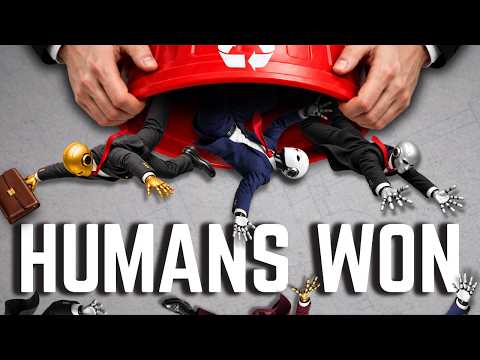
The AI takeover is beginning to backfire during a period defined by enormous artificial intelligence spending, growing financial pressure, and a widening disconnect between the promises surrounding AI and its actual economic value. As OpenAI, Nvidia, Microsoft, and other Big Tech companies continue pushing the AI revolution forward, businesses are confronting the consequences of replacing human workers with automation that may be more expensive and less effective than originally anticipated. What was once presented as an inevitable transformation of the global economy has become closely associated with AI layoffs, failed automation initiatives, declining productivity expectations, and growing concerns surrounding the sustainability of the AI bubble.
The attempt to replace human workers with artificial intelligence has created an increasingly difficult situation for companies pursuing automation. Businesses continue investing in generative AI, ChatGPT, AI agents, and automated systems while navigating the practical challenges of implementing these technologies throughout everyday operations. As AI adoption becomes intertwined with corporate restructuring, layoffs, and workforce reductions, questions surrounding whether artificial intelligence can genuinely replace human labor are becoming harder to ignore. The promise of lower operating costs and greater efficiency is colliding with the financial reality of maintaining increasingly expensive AI systems.
At the same time, the AI bubble is confronting another major disruption following Jensen Huang's resignation from Nvidia, raising questions about the future of the financial relationships supporting the artificial intelligence boom. Nvidia has become central to the enormous spending surrounding AI chips, data centers, and computing infrastructure, while Jensen Huang's leadership has been closely associated with the industry's rapid expansion. His departure introduces uncertainty into an already fragile system of circular financing, speculative investment, and extraordinary expectations surrounding future AI demand. As the artificial intelligence industry struggles to justify its spending, the loss of one of its most influential figures threatens to further destabilize the financial foundations supporting the AI revolution.
OpenAI and ChatGPT represent another major part of this uncertainty. As companies race to develop increasingly advanced artificial intelligence models, the cost of competing continues placing pressure on business models built around expectations of future growth. Competition from Anthropic, Chinese AI companies, and open source AI models is also reshaping the industry, challenging assumptions about the value of expensive frontier models. As AI companies struggle to balance technological development with profitability, the financial expectations surrounding the AI revolution become increasingly difficult to maintain.
The AI takeover is no longer simply about whether artificial intelligence can eventually replace human workers. It is about what happens when companies restructure their businesses, eliminate jobs, and commit enormous amounts of capital to technology that struggles to deliver the promised financial benefits. As Nvidia, OpenAI, and Big Tech navigate growing pressure surrounding the AI bubble, the possibility of an AI crash reflects a much larger contradiction within the economy. The same artificial intelligence revolution that promised to make human labor obsolete may ultimately expose just how dependent businesses remain on the workers they attempted to replace.